


Ball valves and threaded ball valves are both valves that achieve opening and closing by rotating the ball 90°. They have the same working principle, but there are significant differences in connection methods, applicable working conditions, and structural characteristics. The following will explain them from multiple dimensions:
1. Different connection methods (the most core difference)
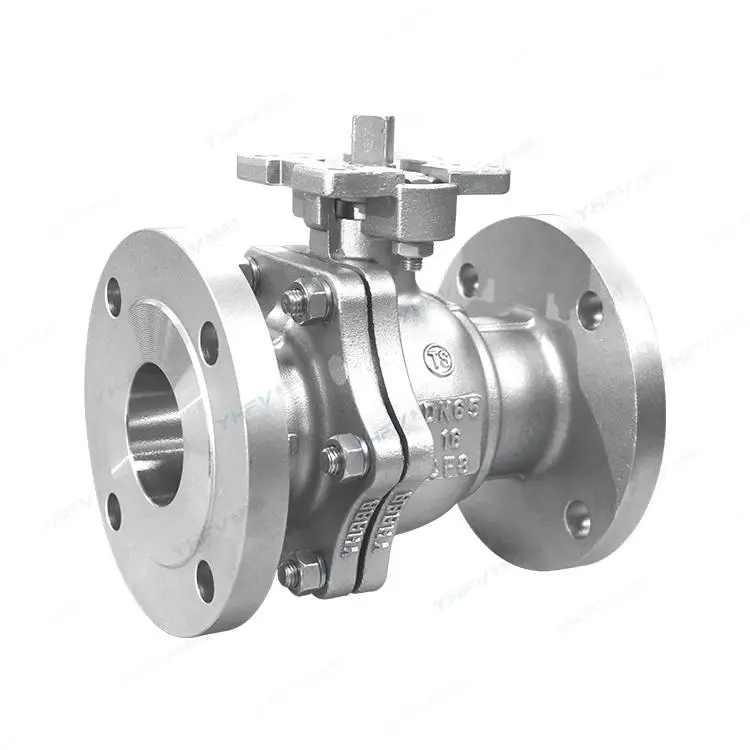
The ball valve with flange connection is connected to the pipeline flange through a flange plate, with a sealing gasket added in the middle, and then tightened with bolts. This method relies on the pre-tightening force of the bolts to compress the sealing surface, making the connection firm and facilitating disassembly and assembly.
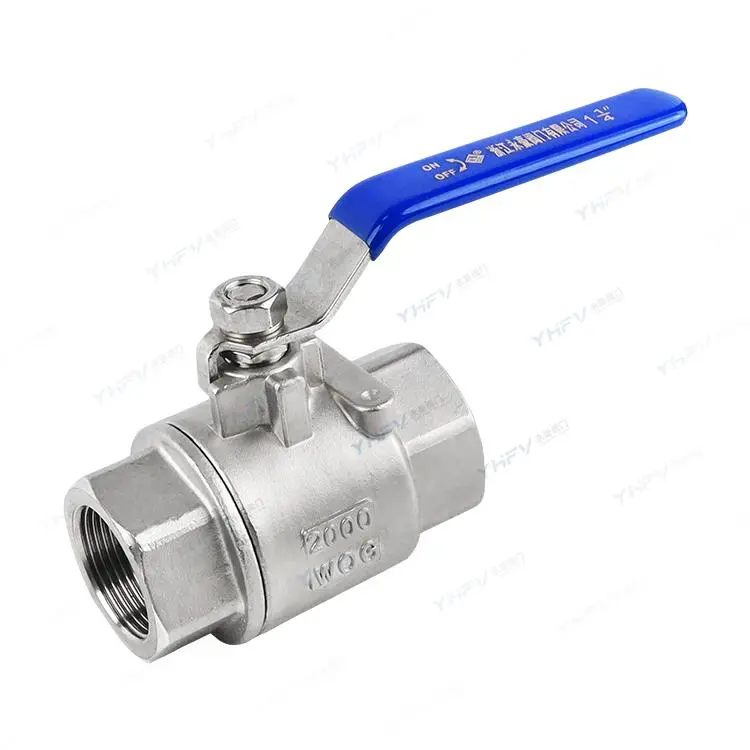
The threaded ball valve is directly connected to the pipeline's threaded interface through the internal or external threads on the valve body, without the need for additional flange plates and bolts. The structure is more compact.
2. Different applicable pipe diameters and pressure ratings
The ball valve with flange connection has a wide range of pipe diameters, from DN6 to DN900, and covers nominal pressures from PN1.0 to 32.0 MPa, even higher. It is usually preferred for pipelines with diameters above DN50, especially for large-diameter and high-pressure applications.
The threaded ball valve is mainly used for small-diameter pipelines, with common specifications of DN6 to DN100 (generally DN50 and below), and nominal pressures usually in the range of PN1.0 to 6.3 MPa, mostly used in low-pressure systems.
3. Different applicable temperature ranges
The ball valve with flange connection has a very wide temperature range, from -196°C to 540°C, covering the needs of both low-temperature and high-temperature media. Soft seals (PTFE) are generally suitable for ≤250°C, while hard seals can be used for higher temperatures.
The threaded ball valve is limited by the sealing material and usually operates at temperatures between -20°C and 200°C (PTFE seals are approximately -30°C to +180°C, PPL seals are approximately -30°C to +250°C). Its temperature adaptability is relatively weak for high temperatures.
4. Different sealing performance and pressure-bearing capacity
The flange connection has stronger overall sealing performance due to the uniform compression by bolts and the large area of the sealing gasket, and can withstand higher and fluctuating working pressures, making it suitable for high-pressure and large-flow industrial pipelines.
The threaded connection's sealing relies on the interference of the threads, which is prone to leakage under high pressure over time, and the threads may loosen under drastic temperature changes. Therefore, it is more suitable for low-pressure and low-temperature scenarios.
5. Different installation and maintenance methods
The installation of the ball valve with flange connection requires aligning the flange holes, inserting bolts, and evenly tightening them. It usually requires the cooperation of two or more people, but the disassembly and maintenance are convenient, making it suitable for pipe systems that require regular maintenance.
The installation of the ball valve with threaded connection is simple, just inserting it directly, and it can be operated by one person. However, during disassembly, the valve body needs to be rotated, and repeated disassembly and assembly can easily wear the threads. Once the threads are damaged, it is difficult to repair, especially when fixed on pipelines. It is more difficult to operate in such cases.
6. Different volume and cost
The ball valve with flange connection is larger in size and has a relatively complex structure, requiring accessories such as flanges, bolts, and gaskets. The overall cost is higher.
The ball valve with threaded connection is smaller in size, has a simpler structure, and fewer components, and is more economical. It is more advantageous for cost-sensitive small-scale projects.
7. Different typical application scenarios
The ball valve with flange connection is widely used in industrial pipelines in fields such as petroleum, chemical, power, metallurgy, urban heating, long-distance pipelines, etc., especially in high-pressure, large-diameter, and occasions requiring frequent maintenance.
The ball valve with threaded connection is mostly used in household water supply, small heating branch circuits, steam small pipelines, building automation, medical machinery, packaging machinery, etc., in low-pressure and small-diameter scenarios.
In summary, if the pipeline diameter is large, the pressure is high, and frequent maintenance is required, choose the ball valve with flange connection; if the pipeline diameter is small, the pressure is low, and installation simplicity and low cost are preferred, choose the ball valve with threaded connection. When making a final selection, it is necessary to consider factors such as the nature of the medium, temperature, and installation space.